
Anxiety & Stress
Including ongoing worry, burnout, panic, overwhelm, and difficulties managing pressure or uncertainty.
Counselling & Psychotherapy
ACPS offers accessible counselling and psychotherapy for adults across Bristol and Bath.
Whether you are experiencing anxiety, depression, grief, relationship difficulties, life transitions, or simply feeling overwhelmed, therapy can provide a space to reflect, explore, and find support.
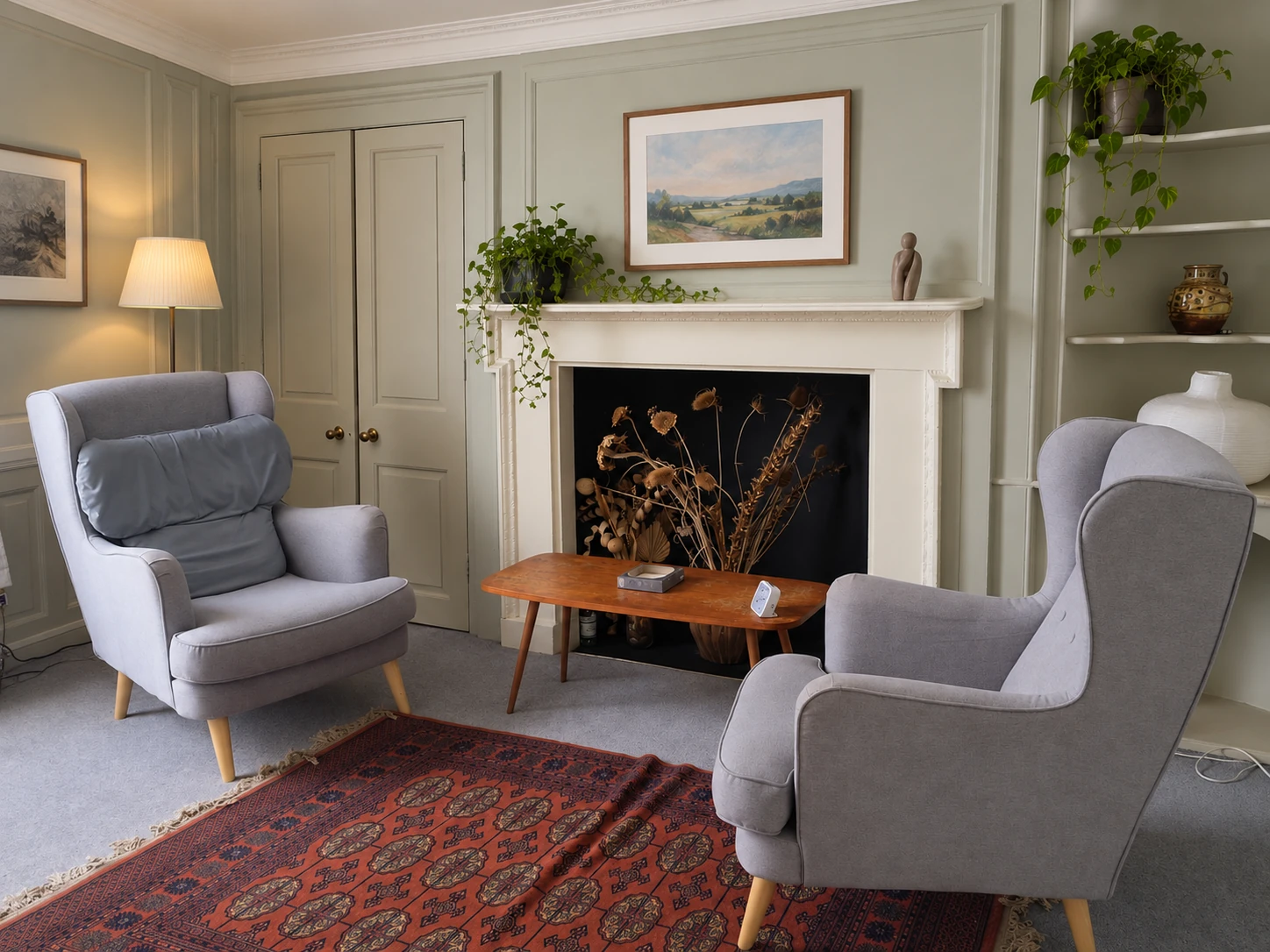
Beginning therapy can feel like a significant step.
Many people contact us when they are struggling emotionally, feeling stuck, facing relationship difficulties, or coping with major life changes.
Our aim is to offer a supportive and thoughtful therapeutic environment where people can speak openly, explore their experiences, and feel listened to without judgement.
Including ongoing worry, burnout, panic, overwhelm, and difficulties managing pressure or uncertainty.
Therapy can provide support when life feels heavy, difficult, disconnected, or emotionally exhausting.
Exploring patterns in relationships, communication difficulties, loneliness, separation, or conflict.
Support following bereavement, endings, or significant life changes and transitions.
A space to begin understanding and processing difficult or painful experiences safely and at your own pace.
Therapy is not only for crisis. Some people seek therapy to better understand themselves and their lives.
When you contact ACPS, we will usually begin with an initial conversation to understand what kind of support you are looking for and whether our service is appropriate for your needs.
If suitable, we will discuss the next steps, including therapist availability, practical arrangements, and fees where relevant.
Therapy sessions are confidential and provide a regular space to reflect on whatever feels important to you.
• Initial enquiry and response
• Discussion of availability and needs
• Ongoing confidential sessions
• Supportive and ethical practice
Fees
We aim to make counselling and psychotherapy as accessible as possible while providing a high-quality professional service. Our fees are reviewed periodically, and we recognise that financial circumstances vary from person to person.
Our standard fee for individual therapy is £70 per 50-minute session.
This fee applies from 1 September 2026 and is reviewed annually on 1 September.
ACPS is able to offer couples therapy through selected therapists.
Our standard fee for couples therapy is £90 for a 60 minute session.
The fee for Group Therapy is currently £120 per calendar month.
Where ACPS funds are available, we may be able to offer subsidised therapy to people who would otherwise be unable to afford the full fee.
The likely fee range is discussed when you contact us and agreed individually during the assessment appointment.
Places supported by the ACPS Treatment Fund are usually offered for up to 16 sessions in the first instance.
Some ACPS therapists may choose to offer a limited number of reduced-fee places independently of the Treatment Fund.
If this may be relevant to you, it can be discussed during the assessment process. Any reduced fee is agreed with the ongoing therapist and depends on availability.
If you would like to discuss your circumstances or ask whether reduced-fee support is currently available, please contact ACPS.
Contact ACPS
ACPS is committed to making therapy more accessible to people from a wide range of backgrounds and circumstances.
We recognise that finding the right support can sometimes feel difficult or intimidating, and we aim to make the process as clear and welcoming as possible.
If you are unsure whether therapy is right for you, we welcome initial enquiries and conversation.
Contact ACPSFrequently Asked Questions
If you are considering counselling or psychotherapy, you may have questions about how the process works. The answers below address some of the questions we are most commonly asked.
Counselling and psychotherapy helps you build resources within yourself to approach difficulties in your life. Often the origin of our difficulties is in the past but the link may not be obvious.
Therapy can help you make connections between your past and your present. With the help of your therapist, who is trained to pay attention to your inner world of thoughts, feelings and ways you respond to stress, you are gradually able to gain greater insight into yourself.
This insight can in turn become a powerful resource as instead of feeling stuck in old patterns of being, you can have more ownership and choice in the way you live your life.
It is normal for most people to feel lost and overwhelmed at some point in their lives.
You can talk with your therapist about anything troubling you, however large or small you think the problem is. It may be that you do not have a specific concern but an underlying feeling of unhappiness or that something is not right.
Your therapist will work sensitively alongside you to help you gain insight into your situation.
When you meet your therapist, they will introduce themselves but will not talk about themselves. This is to give you time and space to use your session in whichever way may be most helpful.
Regular sessions differ from the assessment session. In a regular session your therapist will not ask as many questions, nor will they be writing notes.
Some people may find the early stages of therapy uncomfortable as they are unsure what is expected of them or how to use the time since the therapist is not setting out an agenda. It is a good idea to let your therapist know if this happens, as the communication of how you feel is an important aspect of the work.
Sometimes therapy is for a time-limited period which is agreed at the outset – for example 8 or 12 sessions.
Alternatively, you may not be clear about how long you need to be in therapy and sessions are then open-ended. You can talk to your therapist during your therapy to review how things are going.
The ending of therapy is an important part of the process and should be planned by you and your therapist together.
Sessions are usually once a week and last for 50 minutes. Your therapist may suggest more frequent meetings if it is appropriate.
To find out more about our service or to make an appointment, please ring ACPS on 0117 930 4447.
If we are not able to take your call, please leave a message and we will contact you as soon as we can. Alternatively, you can email us using the contact form.
When you contact ACPS for the first time, we will take some details and offer you an appointment for an initial meeting.
During this meeting, you will have the opportunity to explore your reasons for getting in touch and to clarify whether and how therapy can help you.
This meeting lasts for 50 minutes and there is a fee for the assessment session.
If therapy is appropriate for you, we will then make every effort to match you with one of our therapists who best suits your needs.
We try to arrange an initial meeting within one to two weeks of your enquiry.
We will always try to see you as quickly as possible, but at times of particularly high demand there may be a delay before regular therapy sessions become available.
Your therapist will not give information to anyone else without your permission apart from their professional supervisors, who are bound by the same confidentiality requirements.
The only circumstances in which confidentiality might be broken are where there is a serious risk of harm to you or others, or in very rare cases where the law requires disclosure.
Wherever possible, your therapist would discuss this with you first.
Counselling and psychotherapy have many things in common.
Counselling often addresses current issues with a particular focus and may be relatively short term.
Psychotherapy allows deeper exploration of underlying patterns and feelings associated with longstanding difficulties, often rooted in earlier experiences. Psychotherapy is usually longer term, and the duration is agreed between you and your therapist.
Some of our consulting rooms in Bristol are on the ground floor and have wheelchair access.
Please let us know if you have specific access requirements so that we can make appropriate arrangements.
If you would like to explore therapy with ACPS, we welcome you to get in touch.